Technology has become embedded in nearly every sector of the economy. Businesses of all kinds now depend on software systems to manage operations, communicate with customers, and automate routine tasks. Artificial intelligence is accelerating that process. Yet as automation increases, so does the importance of the people who can direct, evaluate, and work alongside these systems.
Parents are paying close attention. Technical literacy is increasingly viewed not as a specialty skill but as a foundational competency, one that schools are not always well-positioned to develop on their own. That reality has created sustained demand for supplemental STEM education programs, and it is part of why children’s coding franchises have grown into a serious investment category.
The workforce data reinforces the picture. According to the U.S. Bureau of Labor Statistics, there were nearly 1.9 million software development jobs in 2024, with a median salary of $131,450. Employment in the sector is projected to grow 15% between 2024 and 2034, roughly three times the national average. For franchise investors, that figure matters less as a pitch point and more as a signal about whether family demand for this category is likely to hold or soften over time. Long-term enrollment-based businesses need durable market conditions, and the employment projections suggest those conditions are in place.
This paper examines the market forces driving demand for STEM education and analyzes how the Code Ninjas franchise model aligns with those trends. The goal is to give prospective franchisees a clear-eyed picture of what the business is, how it works, and what questions they should be asking.
Technical Literacy in the Age of AI
There is a common assumption that AI will reduce the need for technical skills. The evidence so far points in a different direction.
AI tools can now assist with writing, image generation, code development, and data analysis. But they still require human direction. Someone has to structure the request, assess whether the output is accurate, identify where it falls short, and refine the result. The more automation advances, the more employers need people who can think logically, break problems into steps, and judge whether a system's output is actually correct.
The broader economic picture reflects this. A McKinsey & Company analysis found that businesses across healthcare, finance, logistics, manufacturing, retail, and marketing are increasingly integrating AI-assisted systems and automation into daily operations. More workers, across more industries, now need at least a working understanding of how digital systems function and how to interact with them effectively.
For families, this trend has shifted how they think about extracurricular investment. STEM programs that once carried an optional, enrichment feel are now viewed by many parents as preparation for academic and professional environments that will be shaped by technology. That shift in perception has meaningful implications for long-term enrollment stability in businesses like Code Ninjas.
How Code Ninjas Is Positioned on AI Education
One of the more substantive differentiators within the Code Ninjas system is the depth of its AI curriculum. The company reports more than 120 hours of AI-focused instruction integrated across its programs, a level of coverage that remains uncommon in the youth STEM space, where AI often appears only as a short workshop or a single-week camp topic.
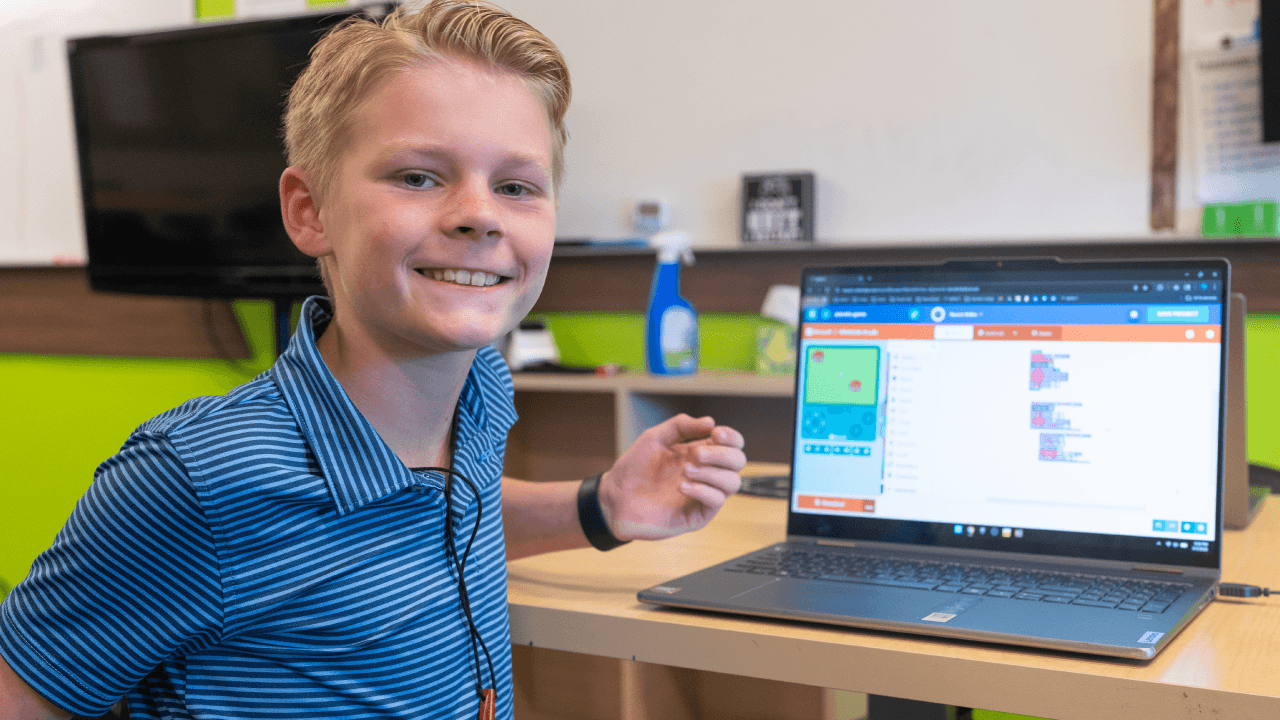
Students do not simply learn that AI exists. They learn how AI tools work, how to interact with them effectively, and how to evaluate what they produce. Programs cover concepts such as prompting, output assessment, and the ways AI systems generate responses. Students apply those ideas through projects involving video game creation, robotics systems, and real coding environments like Unity and MakeCode Arcade.
Parent interest in this kind of curriculum is measurable. According to Technovation, 92% of parents understand that technologies like AI are advancing rapidly and believe children need exposure to them to prepare for the future. Programs that address that concern with specific curricular depth, rather than AI as a marketing term, are likely to resonate more with the families making enrollment decisions.
The AI curriculum also positions Code Ninjas distinctly against competitors. Many coding programs still focus narrowly on introductory programming instruction. A broader platform that includes AI literacy as a substantive component, rather than a tagline, gives the franchise a more defensible position as the market matures.
Durable Skills, Not Dependent on Any Single Technology
Any business built around a specific technology platform carries the risk that the platform becomes obsolete. Code Ninjas has structured its curriculum to reduce that exposure.
The core educational focus is on foundational thinking skills: logical reasoning, structured problem-solving, debugging, sequencing, and systems thinking. Students learn to identify errors, test solutions, and improve outcomes through iteration. These are not skills tied to a specific programming language or software tool. They apply whether a student eventually works in software development, engineering, analytics, or any number of roles that increasingly involve working alongside automated systems.
That adaptability matters in the context of AI, specifically. Artificial intelligence can generate outputs, but it cannot reliably evaluate its own accuracy. Technology companies and researchers have consistently emphasized the need for human oversight because AI systems regularly produce errors, inconsistencies, and outputs that require judgment to assess. The ability to think critically about technology, rather than simply consume it, is exactly what Code Ninjas describes as its educational mission.
For franchise investors, this foundation has practical implications. A curriculum built on transferable thinking skills can evolve as technology changes without requiring the business to rebuild from the ground up each time a new platform or language gains prominence.
A Platform Built for Multiple Entry Points
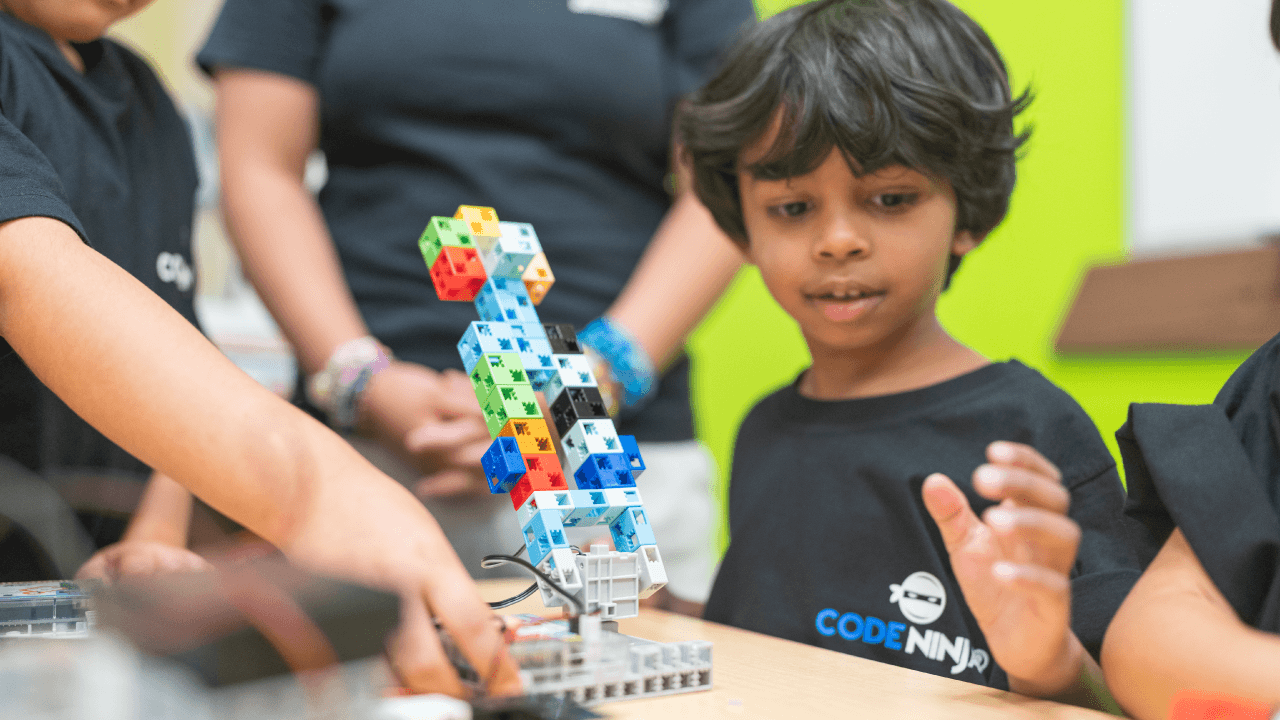
Code Ninjas offers more than a single program. The full curriculum spans coding, robotics, game development, and AI education, delivered through ongoing memberships, academies, and camps.
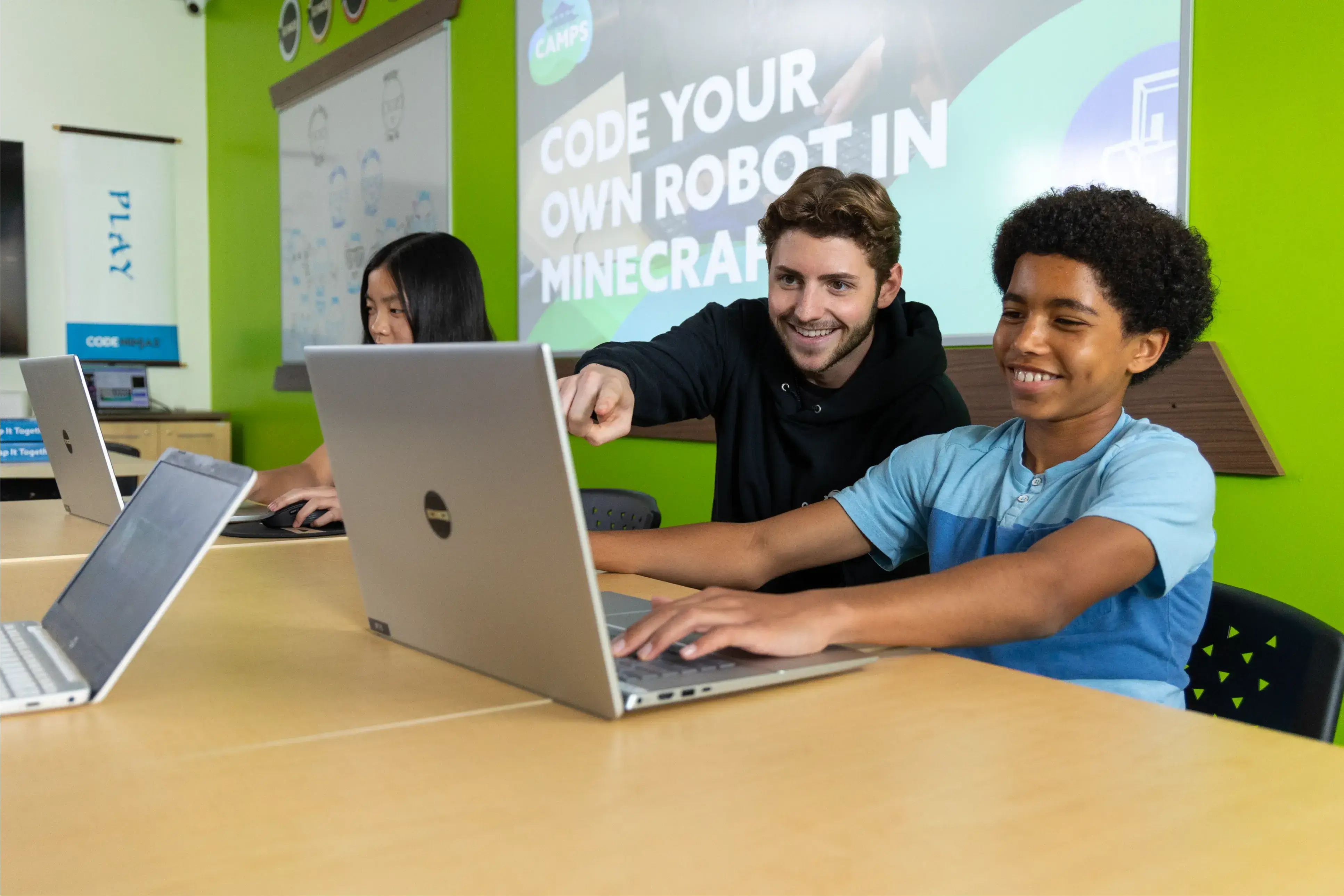
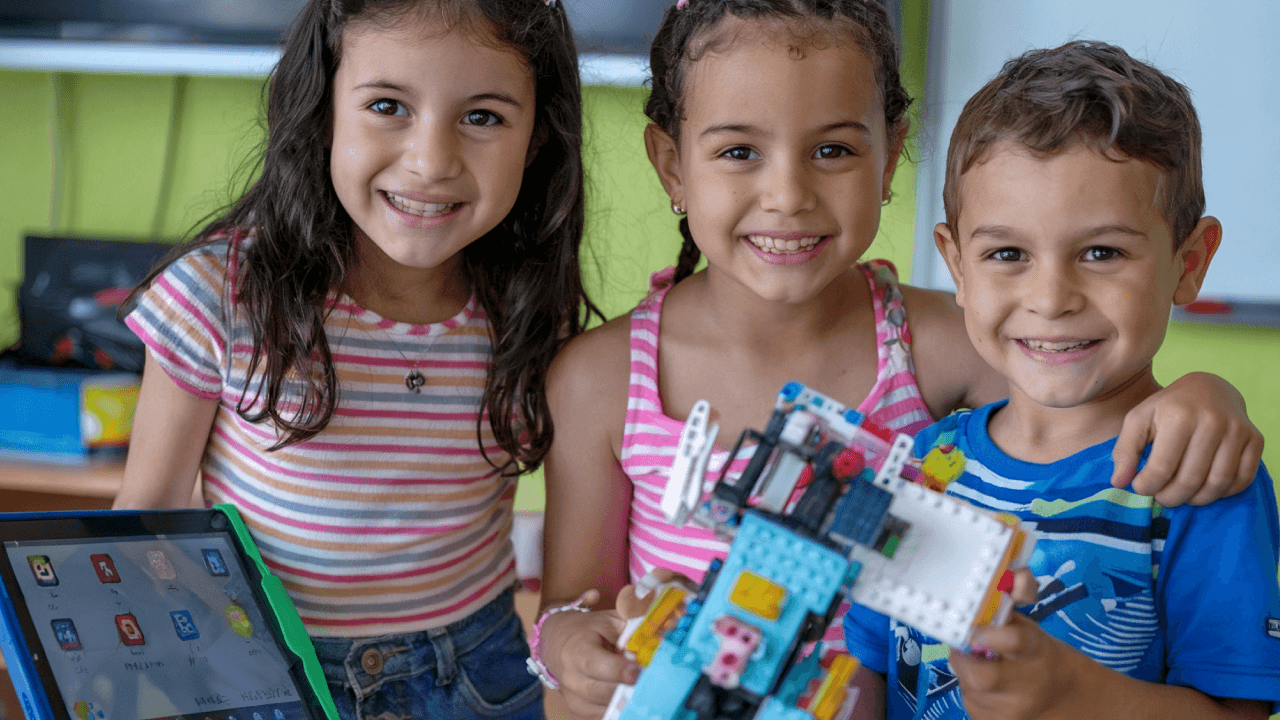
Younger students (ages 5–7) enter through the JR program, which introduces foundational concepts through hands-on activities that require no prior reading ability. Older students (ages 8–14) progress through the CREATE program, working with block-based platforms like Scratch and MakeCode Arcade before advancing to JavaScript and C# in environments like Unity. Specialized Academies extend the curriculum into robotics and AI for students who want to go further.
This structure creates a few notable business dynamics. First, it broadens the addressable customer base. A center can attract students who come in interested in game development, robotics, or general coding, and serve them within the same system. Second, it supports enrollment across different stages of development. Beginners can enter without feeling behind, and advanced students can keep progressing without aging out of the program. Third, a multi-track platform gives families more reasons to stay enrolled as their child’s interests evolve.
From a business standpoint, that breadth reduces dependence on any single program or age group, which can help stabilize enrollment patterns across a center’s operating cycle.
The Belt System and Its Effect on Enrollment Behavior
Code Ninjas uses a belt-based progression model, borrowed from the structure of martial arts programs, a category that has demonstrated for decades how visible, incremental achievement keeps students enrolled long-term.
Students advance through levels as they complete projects, develop new skills, and demonstrate competency. Each belt represents a tangible milestone that students and parents can see. For families evaluating whether to continue a subscription, visible progress is a more compelling reason to stay than general satisfaction with the program.
The business implication is direct. A student who is three belts in and working toward a visible next milestone behaves differently than a student who has completed a fixed-term course. The former has an active reason to keep coming back. This recurring participation dynamic is one of the more important structural features of the model from a revenue standpoint. It supports ongoing enrollment rather than requiring the business to continuously backfill departing students with new ones.
Subscription-based educational businesses that generate predictable monthly revenue are generally more stable to operate and easier to plan around than those that rely on transactional, one-time enrollments. The belt system is the mechanism that supports that pattern within Code Ninjas.
Operational Profile: What the Business Actually Requires
A fair evaluation of any franchise opportunity has to include an honest look at what it takes to run the business day-to-day.
Code Ninjas centers operate primarily during after-school and weekend hours, typically Tuesday through Friday from 3:00 to 7:00 PM and Saturday from 9:30 AM to 3:00 PM. This schedule reflects when the customer base is available, and it also means the business is not operating around the clock. That reduces some of the staffing and management demands that come with businesses requiring full-day or evening coverage.
The model does not involve food inventory, perishable goods, heavy equipment, or a complex supply chain. Operations center on curriculum delivery, student progress tracking, scheduling, staffing, and local marketing. For investors coming from industries like restaurants or retail, that difference in operational complexity is worth noting.
That said, simplicity in one area does not eliminate responsibility in others. Franchisees still need to build and manage a team of instructors, maintain enrollment levels, handle customer relationships, and execute local marketing to drive awareness. The business requires genuine owner engagement, particularly in the early growth phase.
Prior coding experience is not required, and the existing owner base reflects that: franchisees come from backgrounds in business, education, military service, and beyond. What tends to matter more is the ability to manage a small team, engage a community, and operate a membership-based service business with consistency.
Brand Infrastructure and Franchisee Support
Parents choosing an educational program for their child are making a trust-based decision, and recognized brands carry a measurable advantage in that environment. Code Ninjas has built a footprint of over 350 locations across four countries, with more than 240 centers in the United States, giving the brand meaningful visibility and recognition in the STEM education category.
The franchise has also earned certification from the International Society for Technology in Education (ISTE), the first and only after-school program in the nation to hold that distinction. ISTE certification is not a rubber stamp; it involves a competency-based evaluation process that includes professional development, portfolio assessment, and review by ISTE evaluators focused on educational technology and learning outcomes. For parents who do their research, that credential carries weight.
According to the 2026 Franchise Disclosure Document, new franchisees receive a 21-day initial training program along with access to curriculum systems, technology platforms, marketing support, operational procedures, and a comprehensive Brand Manual. The support structure also includes site-selection assistance, center-design guidance, approved vendor networks, franchise-management software, webinars, and ongoing operational resources.
These systems matter because they reduce the time and expertise required to get a new location operating consistently. Franchisees are building on an existing operational foundation rather than designing processes from scratch, which is part of the core value proposition of the franchise model itself.
Financial Considerations: What to Evaluate
The Code Ninjas model generates revenue primarily through monthly membership fees, supplemented by camps and academies, a structure that rewards franchisees who build and retain a strong enrolled student base over time. Like most membership-based businesses, new centers typically go through a ramp period before reaching mature enrollment levels.
Candidates who want to go deeper on unit economics, the ramp-up timeline, and what the financial picture looks like at maturity are encouraged to connect directly with the Code Ninjas franchise development team. They can walk prospective franchisees through the Franchise Disclosure Document, including Item 19 financial performance representations, and can facilitate introductions to existing franchisees for a firsthand perspective on the operating experience.
Is This Opportunity Worth Serious Consideration?
The STEM education market is competitive. Code Ninjas is not the only player in the children's coding space; the category includes national concepts, regional operators, and independent programs, all competing for a similar customer base. That competition is worth acknowledging, because the strength of any franchise model depends not just on the category's growth but on how well a specific brand differentiates within it.
Code Ninjas' differentiators, including the depth of its AI curriculum, the ISTE certification, the belt-based progression system, and the breadth of its STEM platform, are substantive rather than cosmetic. They reflect choices about how the curriculum is built and how the customer relationship is structured over time. Few competitors in the space can point to the same combination of credentialed curriculum, structured progression, and multi-track program depth.
The opportunity aligns best with investors who are drawn to the education sector, who want a business with recurring revenue dynamics and a defined operational model, and who are prepared to engage actively in building their center's community presence.
For candidates who fit that profile, the underlying market trends, the operational structure, and the brand's educational positioning make this an opportunity worth serious evaluation.